FY26 Budget Discourages USDE Outsourcing (February 24, 2026)

Although the recently passed fiscal year 2026 (FY26) budget for the U.S. Department of Education (USDE) did not ban the outsourcing of certain education programs to other federal agencies, it strongly condemned and discouraged the transfer of key programs out of the USDE. The bicameral and bipartisan statement said that no authorities exist for the USDE “to transfer its fundamental responsibilities under numerous authorizing and appropriations laws” to other federal agencies. It also raised concerns that “fragmenting responsibilities for education programs across multiple agencies will create inefficiencies, result in additional costs to the American taxpayer, and cause delays and administrative challenges in Federal funding reaching States, school districts; and schools.” It also said that there are concerns the interagency agreements will “weaken Federal support to protect the rights of students, children, youth, and families under Federal education laws.”

For more from K-12 Dive, click here.

Special Ed. Numbers Continue to Rise Nationwide (February 25, 2026)

A according to federal data analyzed by The Advocacy Institute, a nonprofit that works to improve the lives of people with disabilities, the number of students with disabilities ages 3-21 who qualify for special education services in the U.S. rose 3.8% — or by 301,991 students — in 2024 when compared to the year before. In fact, approximately 8.2 million students ages 3-21 qualified for services under the Individuals with Disabilities Education Act (IDEA) in 2024. IDEA also served 458,920 infants and toddlers through IDEA’s Part C early intervention services, according to The Advocacy Institute’ analysis of data collected by the U.S. Department of Education. Nationally, the number of students ages 3-21 qualifying for IDEA Part B special education and related services rose 12.6% between 2019 and 2024.

The enrollment data mirror trends that many local and state special and general education administrators have noted in recent years — that while their overall student counts are decreasing, the numbers of students with disabilities are on the rise and education experts point to several influencing factors, including more awareness and earlier identification of conditions like autism and attention deficit/hyperactivity disorder, the use of universal screeners for certain learning disabilities, and heightened attention to children’s mental well-being.

For more from K-12 Dive, click here.

State Board of Higher Ed. Adopts Historic Strategic Plan to Transform Postsecondary Education in PA (February 20, 2026)

On February 19, 2026, the Pennsylvania State Board of Higher Education (SBHE) voted unanimously to adopt a strategic plan for higher education – Pennsylvania’s first in more than two decades – designed to support and align the higher education sector, increase affordability and degree attainment, and strengthen the economic well-being of Pennsylvania communities.

Driving a Prosperous Pennsylvania: A Statewide Agenda for Higher Education was developed through an extensive public engagement process that elicited feedback from more than 1,300 Pennsylvanians. Building on the strengths of Pennsylvania’s colleges and universities, the plan calls for coordination to align resources, policies, and efforts to address the pressing needs of the higher education sector. The plan is based on the premise that affordable, world-class postsecondary education fuels Pennsylvania’s economy and provides affordable pathways to good-paying, family-sustaining careers.

The plan is anchored in six goals that include increasing postsecondary attainment, creating affordable pathways to postsecondary credentials, supporting the economic and workforce development needs of the Commonwealth, ensuring accountability and the efficient, effective use of state funds, and strengthening the fiscal health and stability of the sector.

Driving a Prosperous Pennsylvania has received strong support from a wide array of stakeholders who have endorsed the Board’s collaborative approach to developing the plan and its emphasis on economic prosperity.

Created in 2024, the SBHE provides leadership, capacity and support to higher education, industry, and the public sector to achieve critical economic development, workforce, and educational benefits for the Commonwealth. To read what stakeholders have to say about the plan and to read the entire press release, click here.

Shapiro Administration to Serve Meals to Students Across PA this Summer, PDE is Looking for Organizations that Want to Help (February 10, 2026)

The Pennsylvania Department of Education (PDE) is looking for organizations who want to help the Shapiro Administration provide nutritious meals to children in low-income areas across the Commonwealth during the summer months through the Department’s Summer Food Service Program. New sponsors must apply by May 1, 2026.

Last summer, nearly 300 organizations provided nutritious meals to children at approximately 2,100 locations throughout the state. However, to reach more children and narrow the hunger gap that summer may bring, more organizations and meal sites are needed throughout the state, especially in rural areas.

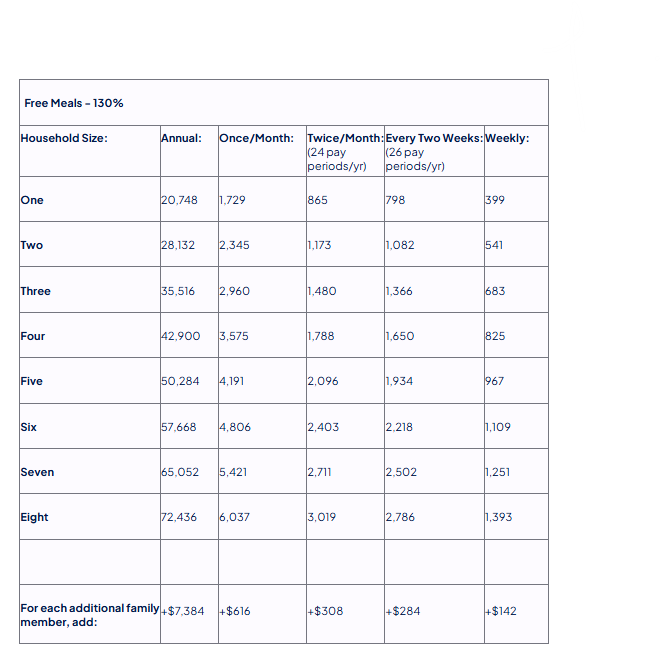
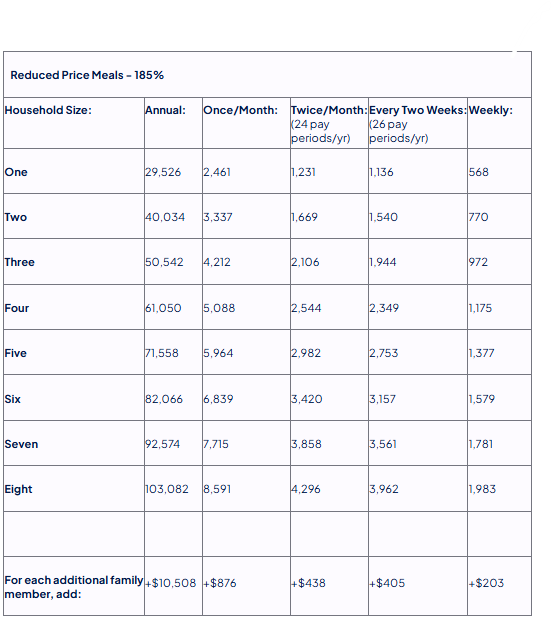
Participating organizations are reimbursed for meals served to children who live in areas in which at least 50 percent of the children qualify for free or reduced-price meals under the National School Lunch Program. 

Participating organizations must be year-round, not-for-profit entities, which include schools, local, municipal or county governments, libraries, churches, fire and police stations, residential summer camps, and national youth sports programs. Organizations approved to sponsor the Summer Food Service Program are responsible for managing the meal service sites that provide the meals to children. Beginning this summer, organizations serving rural areas may be approved to provide non-congregate meals, such as grab-and-go meals or delivered meals, to children in qualifying areas.

Most participating organizations may be reimbursed for up to two meals a day: lunch or dinner, and breakfast or a snack. Those serving primarily migrant children may be reimbursed for up to three meals a day. Camps may serve up to three meals a day, but they are reimbursed only for meals served to children eligible for free or reduced-price meals under the National School Lunch Program. 

The Summer Food Service Program, which began in 1976, is a federally funded child nutrition program designed to reach children in economically disadvantaged areas. People over 18 who are mentally or physically handicapped and participate in public or nonprofit private programs established for the disabled are also able to receive free meals at the Summer Food Service Program sites. 

For more information on becoming a participating organization or a meal site for the summer Food Service Program, view the website at www.education.pa.gov/sfsp. You can also call 800-331-0129 or email RA-SFSP@pa.gov. Program information may be made available in languages other than English. Persons with disabilities who require alternative means of communication to obtain program information (e.g., Braille, large print, audiotape, American Sign Language), should contact the responsible state or local agency that administers the program or USDA’s TARGET Center at (202) 720-2600 (voice and TTY) or contact USDA through the Federal Relay Service at (800) 877-8339.

USDE Doubles Down on Anti-DEI Efforts (February 9, 2026)

The U.S. Department of Education (USDE) will continue to target diversity, equity and inclusion (DEI) programs in schools under Title VI despite a court block on its controversial February 14, 2025 anti-DEI Dear Colleague letter. That letter announced the USDE’s policy interpreting Title VI, which protects students from discrimination based on race, ethnicity and national origin, to prohibit DEI programs. It said some schools’ race-based equity programs discriminate against White and Asian students and could result in federal funding loss for school districts.

The USDE had appealed to the 4th U.S. Circuit Court of Appeals in October 2025 in an attempt to continue implementing the policy after it was blocked in the lower courts. However, the USDE withdrew its appeal last month and is now exploring other means to implement its anti-DEI efforts. Thus, many suspect that the USDE will take a case-by-case approach to target DEI efforts rather than using the court-blocked policy letter to enact an across-the-board restriction on the programs.

For more form K-12 Dive, click here.